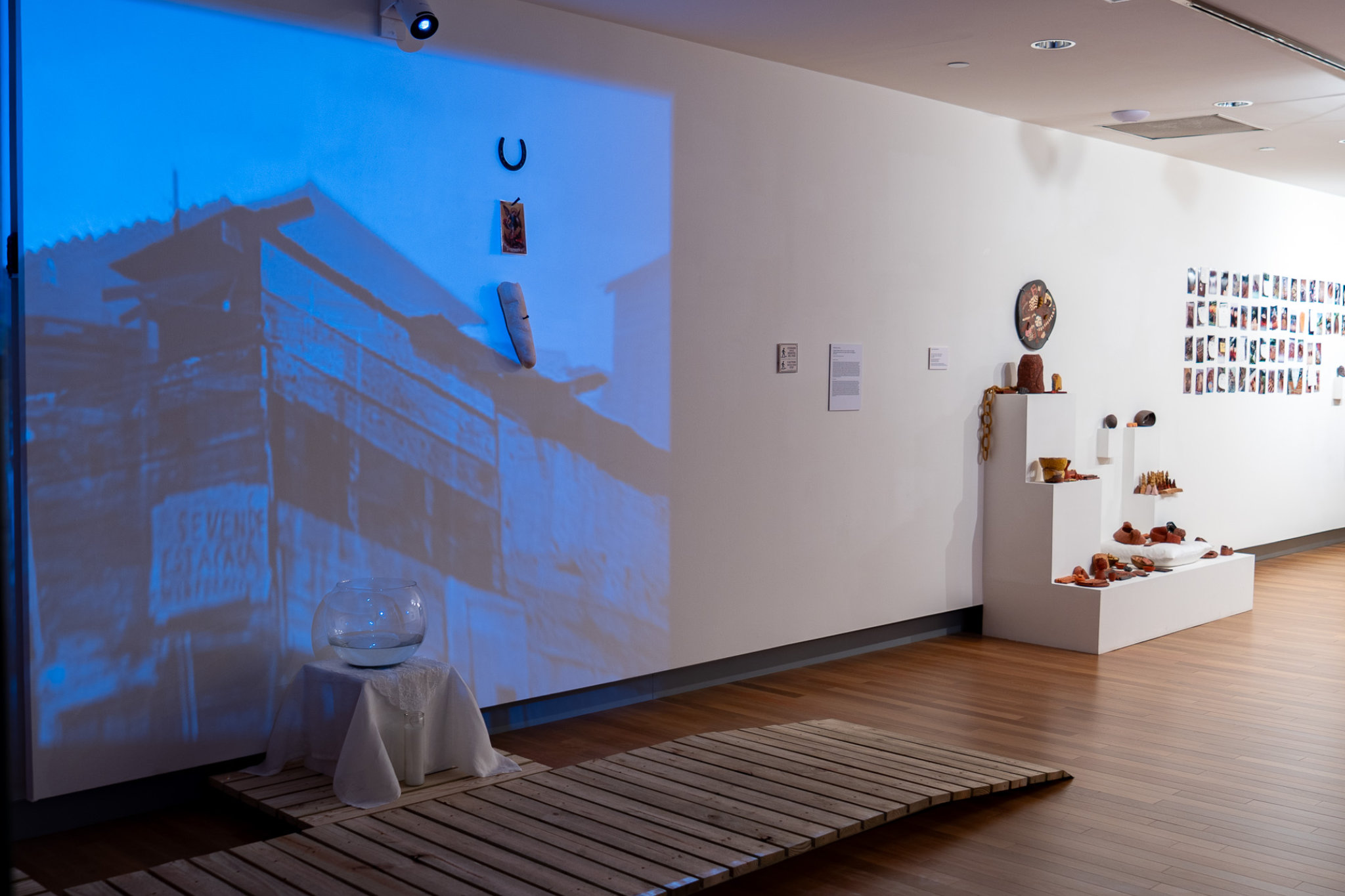
In English, the prefix re expresses a backward movement, a repetition, which often implies opposition and disagreement with events that have taken place, combining and articulating memory and action. To reinhabit, therefore, is to return, in fact, to a place in the past, and to reclaim it as an important space in the face of the possible apathy or devastating disinterest that characterizes our times.
The three creators who participated in the MAPR 2025–2026 Artist in Residence program address the issue of memory, each from a different conceptual position and using different media to present us with stories related to the past in search of its recovery.
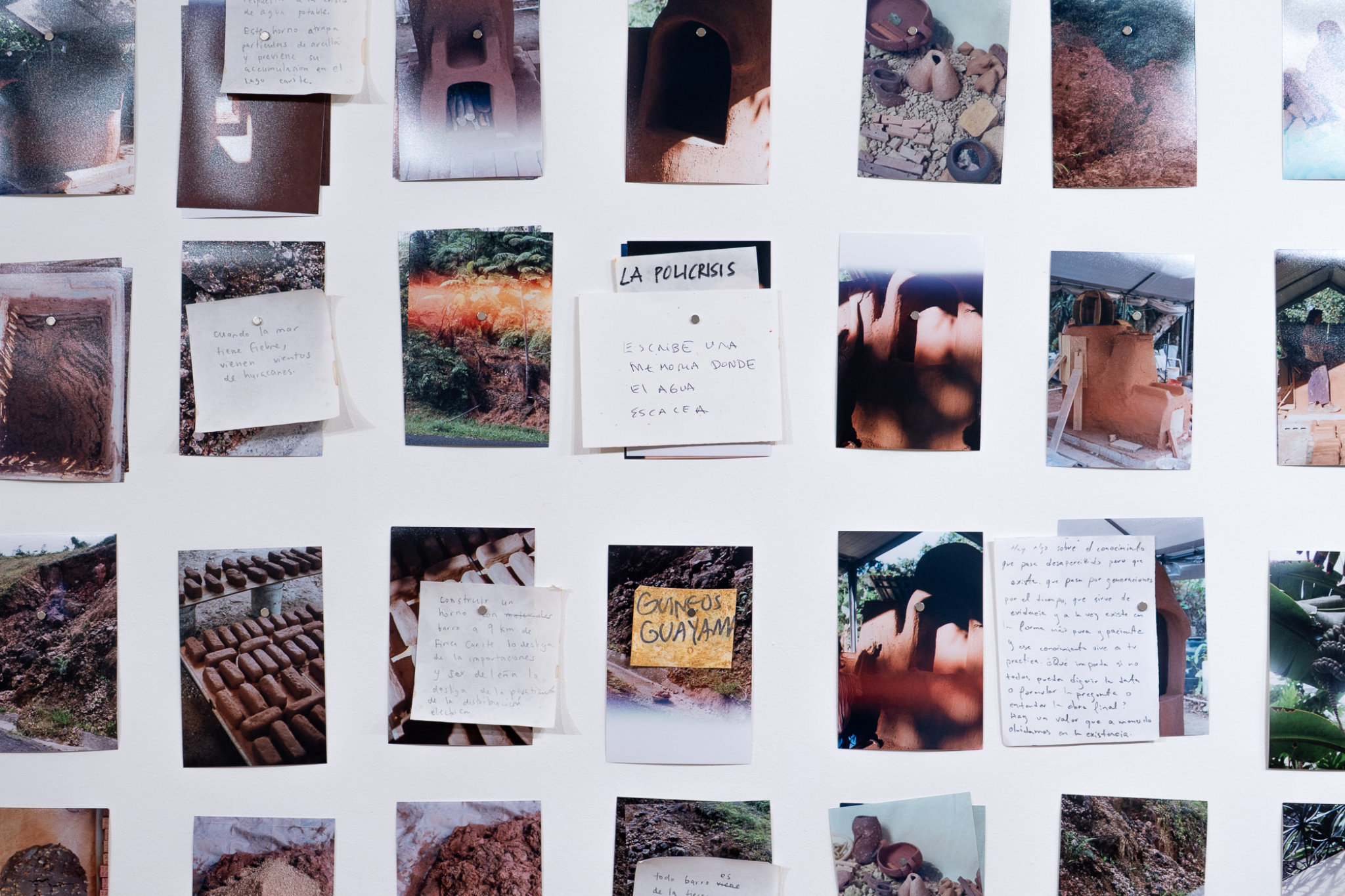
Amara Abdal Figueroa’s Serie los guineos, orden oxisol [The Bananas Series, Oxisol Order] stems from the quintessential dwelling place: the soil or the land. Throughout her career, the artist has studied the clay of the Island, creating ceramic pieces that, in her own words, “can end up in fragments or productive failures.” It is an experimental work that puts all her attention on the study and rescue of soil types and that, on this occasion, led her to manufacture a kiln to fire her ceramics. Her work, constantly in process, does not seek immediate results. For the artist, research and testing constitute the very body of the work. The experience of the land connects her with the ancestral past, clarifying the present.
Brenda Cruz Díaz’s installation El agua siempre vuelve a su cauce: regreso al mangle [Water Always Returns to its Course: Back to the Mangrove] delves into the former community of El Fanguito, on the bank of Caño Martín Peña, a community born as the result of the changes in economic policies implemented in the late 1930s that forced rural dwellers to leave their land and settle in the city. To create this piece, the artist carried out documentary research and interviewed people who belonged to that community. According to the artist: “The piece reaffirms the need to face the past, to live with the past as an exercise in collective memory, and to imagine new forms of community and coexistence through art.” Using water as a metaphor, the installation poetically synthesizes the recuperation of the territory and the memories of this community.
Adriana García Soto’s Aquí había un barrio [There Used to Be a Neighborhood Here] also seeks to rescue the collective memory and thus reinhabit it. This is the community of San Mateo de Cangrejos, adjacent to the Municipal Hospital of San Juan—today the Museum of Art of Puerto Rico—which was initially expropriated in the early 2000s. Currently, the Santurce Park is located there. To recreate the community, the artist uses illustrations and 3D virtual models of the houses, which she replaces in their original locations through augmented reality. As part of the process, she uses written documentation, images of the time, and interviews with members of the vanished community.
The three artists offer us different views of the past to vindicate it and thus reinhabit it, giving way to a dialogue that is open to future reinterpretations.
Juan Carlos López Quintero
MAPR Curator